When it comes to pecking order, Texas A&M University’s Department of Poultry Science rules the roost. The national leader in producing poultry science graduates — accounting for nearly 40% — Texas A&M students have a 100% job placement.
“Our students are offered two to three jobs months before graduation,” explained professor and department head Dr. Audrey McElroy ’93 ’95 ’98. “As one of only six universities supplying poultry science graduates to the industry, there’s concern about how we can meet demand if the U.S. loses any poultry science departments. It’s our job to provide students with the best education possible to meet industry standards.”
It’s our job to provide students with the best education possible to meet industry standards.
The department doesn’t just produce “good eggs” for the poultry industry. Its tight-knit culture prepares graduates to successfully take flight in whatever fields they pursue. Former student William “Bill” Huffman ’53 said his experiences — including being a member of the 1952 National Champion Poultry Judging Team — influenced his career in law. “The department most certainly set me up for success in school, in my career and in life,” he shared.
Huffman and his wife, Barbara, recently made a generous gift to the department and also planned an estate gift in their will to increase their impact. To recognize their continued support, the department is naming its existing poultry farm complex in their honor and will use their funds to improve facilities. McElroy said their support came at a pivotal time. “We have twice the number of students of other programs yet the oldest facilities,” she said. “The Huffmans’ generosity will allow more students to join our poultry science family, secure a job before graduation and love what they do.”
These Aggies Flew the Coop To…
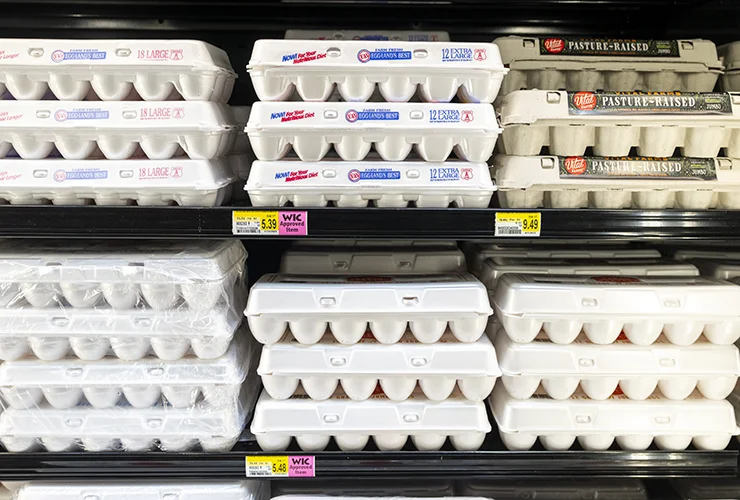 Poultry science graduates help ensure that industry standards are met from production to the time products are placed on store shelves. (Photo by Michael Miller/Texas A&M AgriLife)
Provide Grade A poultry health care.
After receiving her bachelor’s and master’s in poultry science, Dr. Suzanne Young McComb ’98 ’99 ’03 earned her DVM degree from Texas A&M before earning her Master’s of Avian Medicine from the University of Georgia in 2004. Through the years, she’s remained committed to poultry medicine welfare and in overcoming poultry health misnomers like the widely known feather-ruffler: antibiotics.
“Removing the option of antibiotic usage can be in direct conflict with animal welfare, as there’s a time and place where you really need to treat the bird with an approved antibiotic,” she shared. “It can be an animal welfare issue to not treat them when an approved product is available. As a veterinarian, I took an oath to properly care for animals, and one of the tools I have is antibiotics. Much of the ‘antibiotic-free’ movement came from the myth that antibiotics are in the food source. The big thing to know is that antibiotics used by veterinarians are FDA approved. To get approved, rigorous tests are required to ensure that no detectable residue exists in meat or poultry products for human consumption.”
Another hot topic? Hormones. “Added hormones in poultry were outlawed in the 1950s, so that’s a complete misnomer. Chickens are bigger today because breeding stock are selected for optimal growth with less feed. This continuous improvement is key to poultry meat being a sustainable protein.”
If you cross paths with McComb in the grocery store, you won’t find her evaluating labels. “Poultry meat and eggs approved by the USDA all meet standards for a healthy food source. While there is a range of options for consumers, my family buys what’s most economical at the time.”
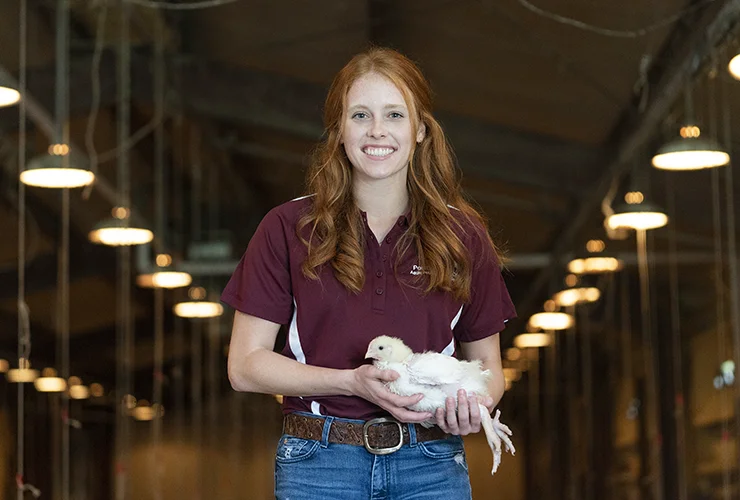 Texas A&M’s Department of Poultry Science is the largest in the nation and offers four degree programs. (Photo by Laura McKenzie/Texas A&M AgriLife)
Keep consumers safe with science.
Dr. Lindy Froebel ’14 ’15 ’20 knew agriculture was her calling, but undergraduate microbiology research springboarded her interest in food safety. Today, as the senior vice president of science and policy for the National Turkey Federation (NTF), Froebel serves as the primary regulatory resource for U.S. turkey producers and processors, providing expertise on topics from microbiology to international trade.
“An integral part of my role is advocating for science-based food safety policies in the nation’s capital,” Froebel explained. During her time with NTF, salmonella has been a top policy priority. “Advances in testing technologies provide opportunities to advance food safety programs and evaluate regulatory framework. Current salmonella regulations are based on prevalence, which means it’s either there or it’s not. We can now more rapidly quantify the amount of bacteria present and better understand the process, which provides an opportunity to update policy.”
But in speaking consumer to consumer, Froebel left simple advice anyone can gobble up: “Every household should own a meat thermometer and use it. This will ensure your meat is safely cooked and will provide a more enjoyable dining experience overall.”
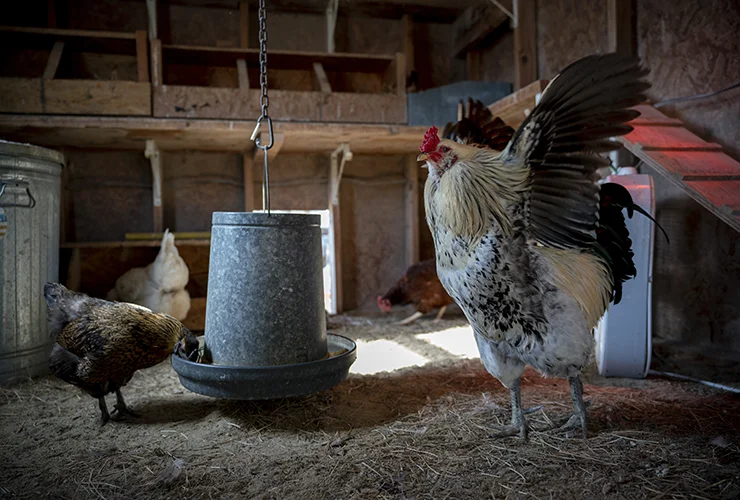 Cage-free housing has gained popularity in the media and among consumers in the past decade. (Photo by Laura McKenzie/Texas A&M AgriLife)
Raise egg-cellent hens.
In his 15 years of egg production experience, cage-free housing is one of the biggest changes Anthony “T.J.” Klein ’06 ’09 has witnessed. The general manager of Texas for MPS Egg Farms — a family-owned operation and the nation’s sixth-largest egg producer — Klein said that about 30% of MPS’ hens are cage-free and 70% are raised conventionally. “Cage-free” means an aviary system inside the house allows hens to move up and down and have access to the ground but rarely to outside.
“About 10 years ago, this style gained traction, and everyone thought we were evolving to cage-free; some states even passed laws,” Klein shared. “With recent supply and demand issues, that’s changing. People just want to ensure that we even have eggs. We’ll continue raising cage-free eggs, but I think it’s important to provide a cheaper option of protein to those who can’t afford them.”
And is a cage-free hen happier? Klein explained that cage-free rearing can present health and physical challenges because birds are in direct contact with each other and have more access to their environment, increasing the risk of disease and injury. “But ultimately, no matter the rearing style, we have a connection with our birds and prioritize their welfare, ensuring they’re happy, healthy and have everything they need.”

Send Message to Jansen
Thank you for submitting a contact form!
Contact form was unable to submit.